

A space for learning is comfortable, inviting, peaceful and safe. It is a space where students feel at ease and interested, free to share ideas and free from judgement. Each student feel that he/she matters in the classroom in order for him/her to be motivated to succeed. Setting up this space takes work with the students—not judging, respecting, and sharing are not always things that come easily. Guidelines for student behaviour need to be established on the very first day, and these need to be maintained, modified, and enforced as a group, all year. Leadership activities that get students thinking as a team are a good way to encourage this climate.
A space for learning that meets these requirements, once the students are in the right mindset, is not hard to find. A classroom, the schoolyard, the streets around the school—any environment can be appropriate for learning. The important thing is that students need change, from time to time, to keep the, interested. Staying at one desk all year is neither stimulating nor motivating. Teachers can easily avoid this monotony by using the outdoor classroom more often. Not only does the area around the school provide a change of scenery, it provides a constantly changing scenery to invoke interest and to inspire.
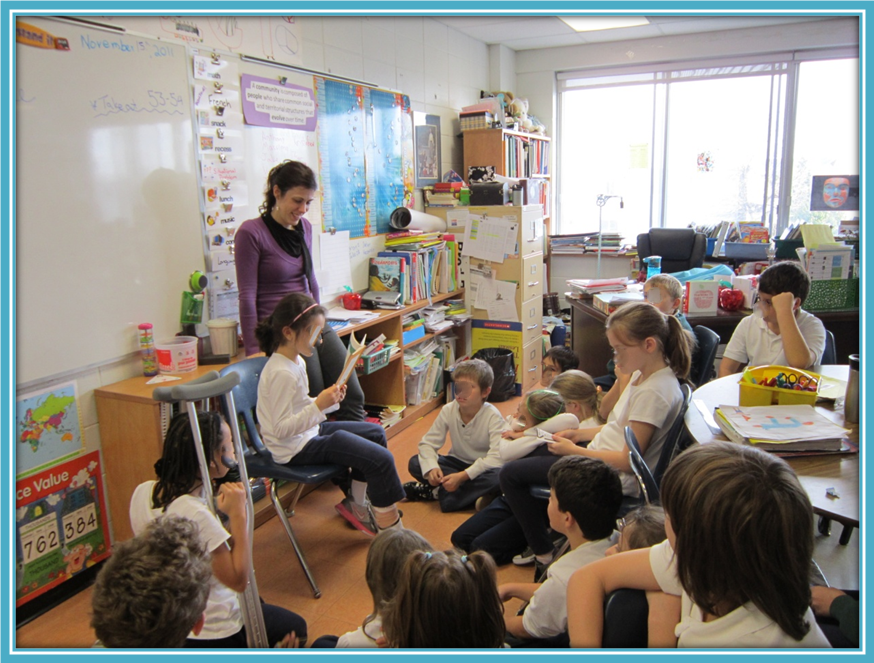
A students shares a book about First Nations—the unit of inquiry—that she found all by herself.
The class gathers to listen.
This environment shows that everyone is comfortable, respectful, and free to move around in their own environment.
I was there to hold up the pictures—the reader had a broken leg!