

“Twenty years from now you will be more disappointed by the things that you didn’t do than by the ones you did do. So throw off the bowlines. Sail away from the safe harbour. Catch the trade winds in your sails. Explore. Dream. Discover.” – Mark Twain
In front of the class, the teacher is very much alone. Yet this profession is not one of isolation! A teacher must extend a hand of welcome to those around them!
1. Parents
- In general, parents want what is best for their students and want to help in whatever ways possible.
- Having parents on board will help students with homework and help parents feel more comfortable about their child’s learning.
- The portal is a great way to involve parents in the classroom without actually having them in the classroom!
- Communication with parents is key—they should know what is going on in the classroom!
2. Colleagues
- Two heads are better than one—and no teacher should have to work alone.
- Good communication within grade level teams and between grade levels helps everyone improve their teaching with fresh ideas and strategies that are tested and true.
3. Community
- Classroom doors should always be open to visitors.
- Students can make relevant connections to learning when guest speakers come into the classroom—whether it is an expert in a topic, someone of a certain profession, or someone’s grandmother from another country.
- These experiences are what students remember most: what is outside of the routine!
- Skype and the SMART board are powerful tools when it comes to opening the classroom to visits!
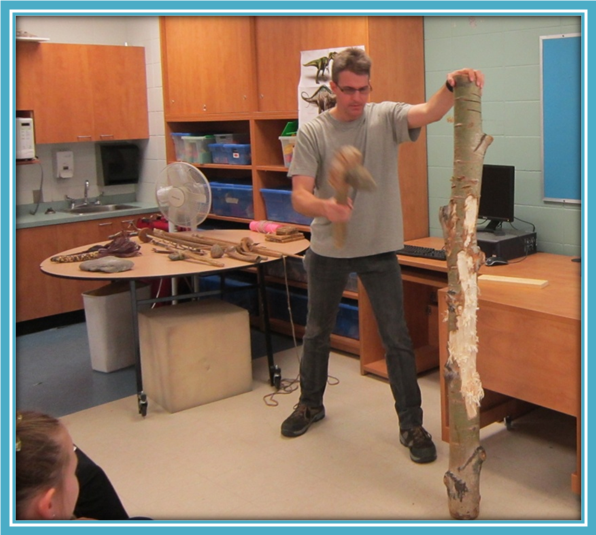
A visit from Archéophone, an archaeological education company based in Mascouche, got students really excited by the tools that First Nations people used. Students also enjoyed that some of the tools were real, and other were reproductions that they could touch.
This is an experience that could not have happened had we not welcomed specialists into the school. I may be an archaeologist, but I don’t have a trunk full of reproduction Iroquois tools c. 1500!
The students were also extra interested because they knew I was an archaeologist as well, they all looked over to me and smiled at least once during the presentation!
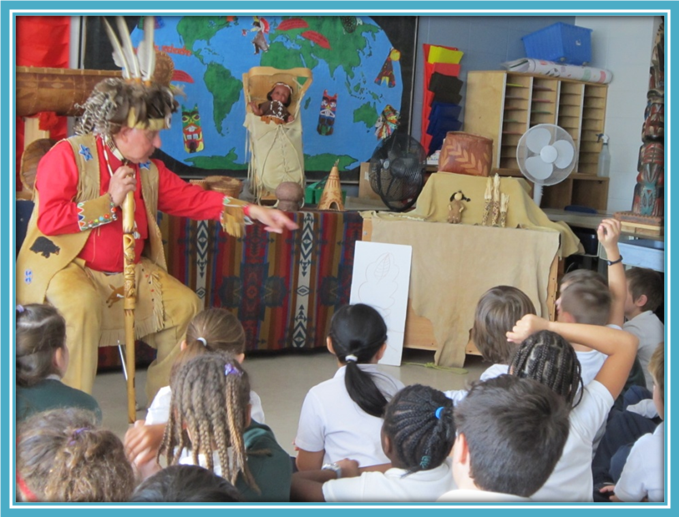
Chief Top Leaf is a friend of my grandfather and an important figure in the Montreal community. He has been putting on educational demonstrations for children for at least as long as my lifetime—and at 75, he’s still going strong!
As my students were doing a unit on First Nations, I didn’t thin it could be complete without a visit from Chief Top Leaf. I asked permission, then took it upon myself to organize the visit. It was a great success, as students were captivated by the items he bought, his dress, and his traditional stories.
None of this would have meant the same coming from me!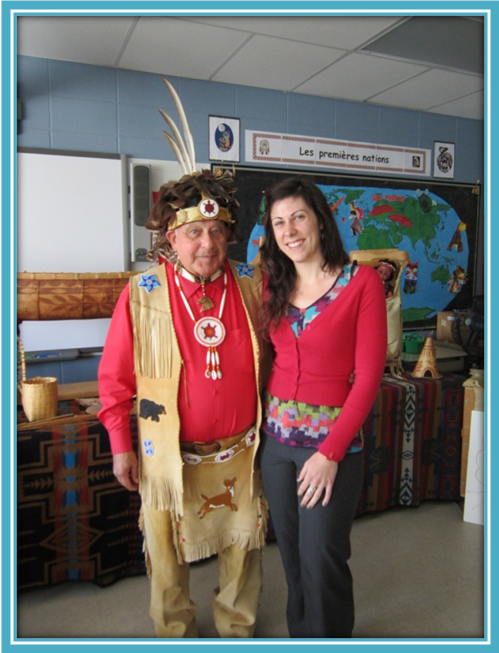
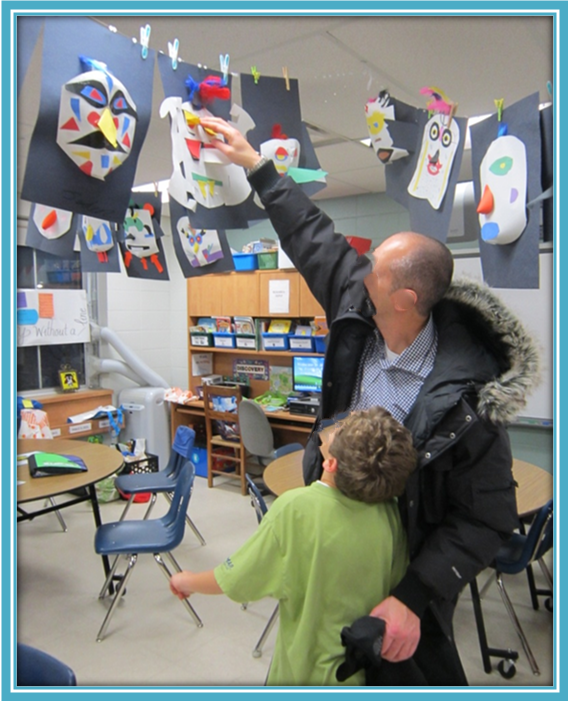
Parents are important partners in the education of their children. Having parents involved with and aware of what their child does in class are important ways to ensure their ongoing support.
A student showing off his work to his father at portfolio night.