

Hey,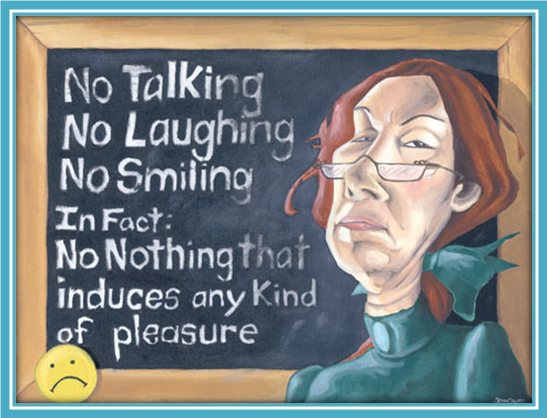
I’M NOT the enemy, or a weird, mean lady, and I’M NOT out to get any of my students. I DON’T wear tacky sweaters or love to yell or live alone with ten cats—only two.
I AM enthusiastic about learning, and creative in making what you thought was boring really, really exciting. I AM in tune with interests, and flexible with my time. I AM knowledgeable about material and versatile in ways to explore it—all without yelling.
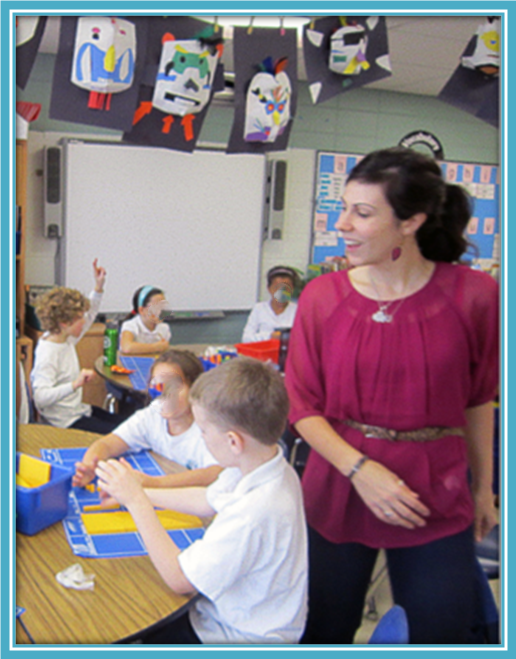 I AM a role model, a guide, a source of knowledge, and a caring adult in a student’s life. I AM a second parent, a mediator, a nurse, a professional, a friend, a colleague, a politician, a developer, and an educator.
I AM a facilitator, helping the students approach topics. I AM a chairman of discussions. I AM a debriefer who can meaningfully summarize a day in a few words.
My name is Kate.
And
I AM A TEACHER!!
Education Is…
Education is passion for learning. It is taking genuine interest in things—all things. I believe that taking a genuine interest in anything and everything, and always wanting to learn more 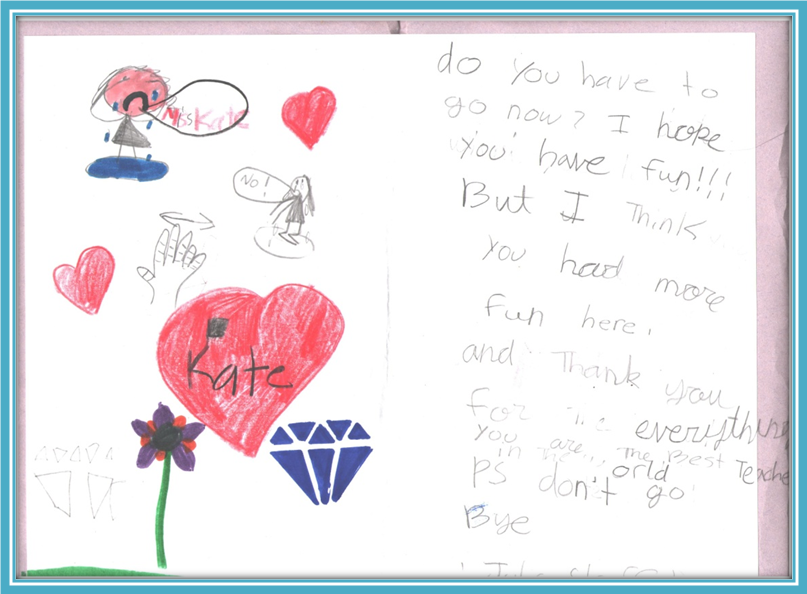 about everything, is what makes a teacher interesting. The passion to learn begins in elementary school. Apathy is destructive; education is the opposite of apathy. The most important thing that any student can learn is how to learn, and how to be passionate about it.
Education is pushing students as far as they can be, without ever making them feel pushed. I believe that students need to be forced out of their comfort zone, challenged to deal with topics and material that cannot be neatly solved or resolved. Students need to be pushed to their limit, and only when they have reached that point should the teacher step in to lend a helping hand. This makes learning exciting and challenging.
Education is experimentation, making mistakes, and learning from them.
Education is the construction of personal ideas. Students must feel empowered in the learning process, to learn actively and to be engaged in hands-on, minds-on ways. I believe that students can only learn by applying new ideas, by playing with new knowledge, and by making it their own. Students cannot learn my ideas, but I can help them experience what I have experienced and guide them in forming personal ideas.
Education is always learning—there is always more to learn!
A Teacher Is…
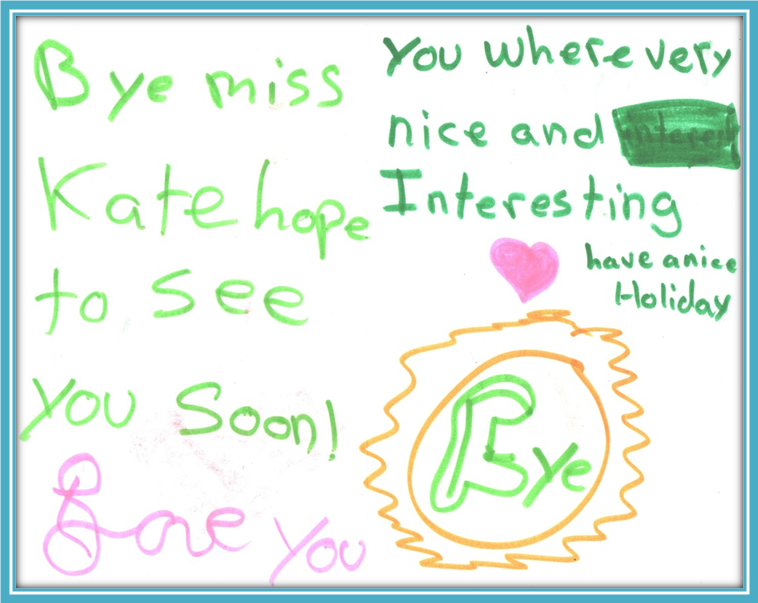 A teacher is anyone who loves to learn, and to share what they have learned with others. Every student in the class is also a teacher. Students have much to learn from each other, and learn more when they take on the role of explaining. The classroom teacher also has much to learn from the students: the educational relationship is one of reciprocity.
A teacher is a guide and a facilitator, who focuses student energy on the task at hand and who makes big topics more approachable. A teacher helps students interact with material. A teacher opens doors, provides experiences, and asks questions to help students approach and understand topics.
A teacher is a chairman of discussions and a debriefer, who can meaningfully summarize the day’s activities.
A teacher is reflective, always reshaping and improving classroom practice, and creative in order to approach the curriculum in a manner that will interest the students and the teacher. If a lesson has been taught a hundred times, it is no longer interesting to the teacher or relevant to the students. To maintain the students’ interests, a teacher must be constantly innovative, updating and modifying lessons, keeping up with current events and topics that are relevant and interesting to students. Content knowledge is important: a teacher should know and understand the curriculum, and be willing to investigate subjects further to be able to answer questions. Pedagogical knowledge is important: a teacher must engage in professional development as an ongoing learner.
A teacher is flexible to student needs, classroom interruptions, guest speakers, assemblies, first snowfalls, rainy days, and the unpredictable and unexpected events that keep the days interesting.
A teacher is versatile and involved in order to meet the needs of various stakeholders in education: students, parents, other teachers, school staff, the school direction, the school board, the community, the government, etc. As such, a teacher is not only a teacher, but also a mediator, a professional, a friend, a colleague, a politician, a developer, and an educator.
My Approach to Curriculum Is…
My approach to curriculum is built on student mastery of basic subjects and disciplines in the curriculum. Basic literacy and computational skills are crucial for students to become lifelong learners. Literacy and computational skills are not taught from textbook, in isolation, but are integrated into broader areas of learning. Once students acquire the conceptual framework and inquiry skills associated with each discipline, inquiry skills are extended to larger issues and delve deeper to the roots of problems. This sort of questioning ties in elements from across the curriculum and helps unify learning. Subjects are thus integrated, overlapping to form a whole.
My approach to curriculum is focused on the importance of children’s interaction with a wide variety of materials and experiences, particularly experiences which cause the individual to examine his or her reasons and thoughts in approaching a problem or dilemma. Primary concern is with the development of intellectual skills (analysis, synthesis, evaluation). There is also an emphasis on problem-solving skills, and possible solutions. The curriculum contains a wide variety of activities, simulations, and games that stimulate independent thinking on the part of the students.
My approach to curriculum is reliant on communication as a tool to integrate learning across disciplines. The student is seen as part of the larger social context. This includes classroom discussion, and the students are encouraged to participate actively in community activities. Techniques such as role-playing, classroom meetings, and communications training are employed in the classroom. School is seen as a vital and potentially enriching experience in its own right, and the present lives of the learners are a major focus of concern. Communication helps to link aspects of the curriculum, such as reading, math, history, artistic activity, science, and ethics and religious culture.
A Space for Learning Is…
A space for learning is well organized and free of clutter in order to promote learning. The organization of space maximized opportunities for open discussion. Lines of sight to important classroom areas, such as a SMARTboard or whiteboard, are clear and nothing obstructs a student’s ability to see what is being written or spoken by anyone in the room. Desks are organized to promote discussion and interaction among students, but also arranged to allow each student to have his/her own personal space.
A space for learning is positive, warm, comfortable, inviting, peaceful and safe. It is a space where students feel at ease and interested, free and secure to share ideas and free from judgement.
A space for learning is not a physical space, but an attitude and a mentality created by the students and the teacher. The physical structure and available materials in the room can help to create an ideal learning space, however any space can be a space for learning. Setting up this space requires work with the students—not judging, respecting, and sharing thoughts are not always things that come easily. Guidelines for student behaviour need to be established on the very first day, and these need to be maintained and enforced as a group, all year. Leadership activities that get students thinking as a team are a good way to create this climate.
A space for learning is any space where students can be comfortable to get into the mindset to learn. A classroom, the schoolyard, the streets around the school—any environment can be appropriate for learning. The important thing is that students need change, from time to time, to maintain high energy and high interest. Staying at one desk all year is neither stimulating nor motivating. Teachers can easily avoid this monotony by using the outdoor classroom more often. Not only does the area around the school provide a change of scenery, it provides constantly changing scenery, which has the power to invoke interest and to inspire.