
| Grimm vs. Disney
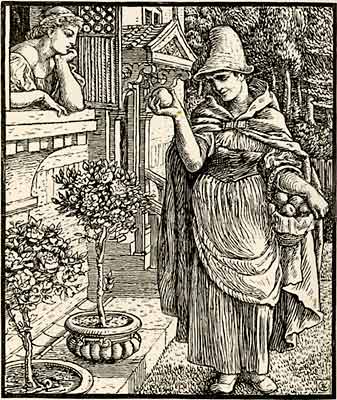 Little Snow White, 1899--From National Geographic 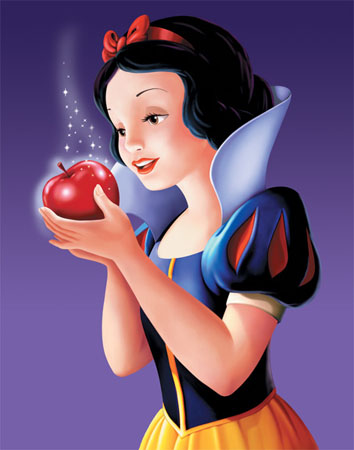 Disney's Snow White |
|||
|
|
||
| Learning Objectives | To critically reflect on literature.
To critically reflect on films. To form opinions about censorship. |
||
| COMPETENCIES | |||
|
COMPETENCY 1 • TO USE INFORMATION
COMPETENCY 3 • TO EXERCISE CRITICAL JUDGMENT COMPETENCY 7 • TO CONTRUCT HIS/HER IDENTITY COMPETENCY 8 • TO COOPERATE WITH OTHERS COMPETENCY 9 • TO COMMUNICATE APPROPRIATELY |
||
|
English Language Arts
COMPETENCY 1 • TO READ AND LISTEN TO LITERARY, POPULAR AND INFORMATION-BASED TEXTS COMPETENCY 4 • TO USE LANGUAGE TO COMMUNICATE AND LEARN
Visual Arts Competencies COMPETENCY 3 • TO APPRECIATE WORKS OF ART, TRADITIONAL ARTISTIC OBJECTS, MEDIA IMAGES, PERSONAL PRODUCTIONS AND THOSE OF CLASSMATES |
||
|
LANGUAGE TO COMMUNICATE
TALK FOR LEARNING AND THINKING |
||
| Materials
|
Students need to have seen the Disney movie Snow White. If they have not seen the movie, they should watch it, in its entirety. This is not part of the lesson plan. The lesson plan was written under the assumption that students would have seen this movie, or at least know the story. If they do not, they should see the movie. This would also help them to appreciate how Disney movies have changed, since Snow White was “the first full-length cel-animated feature in motion picture history, as well as the first animated feature film produced in America, the first produced in full color, the first to be produced by Walt Disney, and the first in the Walt Disney Animated Classics canon” (Wikipedia, 2010).
Pens, papers and ideas. A copy of the Grimm version of Snow White. This is available at www.nationalgeographic.com/grimm/snow_white.html. The version used in the preparation of this lesson plan was Grimm (2003). |
||
| Professional
Development Goals
|
1. To act as a professional inheritor, critic and interpreter of knowledge or culture when teaching students.
2. To communicate clearly in the language of instruction, both orally and in writing, using correct grammar, in various contexts related to teaching. 3. To develop appropriate teaching/learning situations. 4. To pilot teaching/learning situations. 5. To evaluate student progress in learning the subject content and mastering the related competencies. 6. To plan, organize and supervise a class in such a way as to promote students’ learning and social development. 12. To demonstrate ethical and responsible professional behavior in the performance of his or her duties. |
||
| References | Grimm (2003). The Juniper Tree and Other Tales from Grimm (Lore Segal and Randall Jarrell, Translators). New York: Farrar, Straus and Giroux. (Original work published in 1812).
Wikipedia (2010). Snow White and the Seven Dwarfs (1937 film). Retrieved April 18, 2010, from http://en.wikipedia.org/wiki/Snow_White_and_the_Seven_Dwarfs_(1937_film). |
||
|
OUTLINE |
|||
|
TIME |
ACTIVITY |
||
|
Introduction (15min) |
Talk to the students about Snow White, the movie.
Ask for their thoughts about the story, and also their reactions to the fact that it was the first feature length animation film, the first American full length film, the first colour animation and the first Disney movie. Inform them that, even though the movie is very old, it is not the original version of the story, even though it is the version shared with children today. |
||
| Focus
(35 min)
|
Read the Grimm version of the fairy tale.
Discuss the story. Let students share their reactions. What differences do you see between the two versions? The Grimm version is closer to horror than the Disney version. How do you feel about the horrific parts of the story, like when the Queen eats what she thinks are Snow White’s organs or when she is forced to dance in burning shoes until she dies? How do you feel about reading this to children? Why? Do you know what censorship is? If they do not, this must be described. Censorship is when you see music videos and the curse words are bleeped out or body parts are blurred out. What this accomplishes is that those in control of the media outlet have the choice over what you, as a viewer, will see or hear. It is a question of controlling what the viewer has access to. Whole books can be censored, and not made available. In the case of Snow White, the violent parts of the book were deemed to be unacceptable to children, so they were taken out. However, this story began as oral folklore. Generations of children heard this story, and it did not seem to impact them negatively. Given all of the violence we see on television and in video games, why should we censor stories like Snow White? Do you agree with the censoring of Snow White?
Students will react and bring up their thoughts and ideas. They may ask more questions about censorship or about oral folklore. This discussion will be students centered but teacher guided, especially for the explanation of censorship. |
||
| Closing
(10 min) |
Have students reflect on the discussion in their journal.
If they do not keep a journal, have them reflect on a looseleaf. This sort of reflection is not graded for grammar or spelling, only for the ideas presented. |
||
Pages
- 1. Rationale of Unit Plan: Imagine a School…
- 2. Topic: What is Fear?
- 3. Materials
- 4. Lesson Plans
- Lesson 01: The Wolves in the Walls–The Value of Images
- Lesson 02: Word Wall of Terror
- Lesson 03: Three Innocent Piglets Devoured by the Savage, Ferocious Wolf–Horrorifying Fables
- Lesson 04: Look Fear in the Eye–Creating Horrific Art and Illustrations
- Lesson 05: Parts 1 and 2–A Song is Worth 1000 Screams
- Lesson 06: What Makes a Villain?
- Lesson 07: Disney's Villains–What Makes Evil?
- Lesson 08: Grimm vs. Disney
- Lesson 09: The Media Scares Me…
- 5. Assessment
- 6. Reflection
- About