
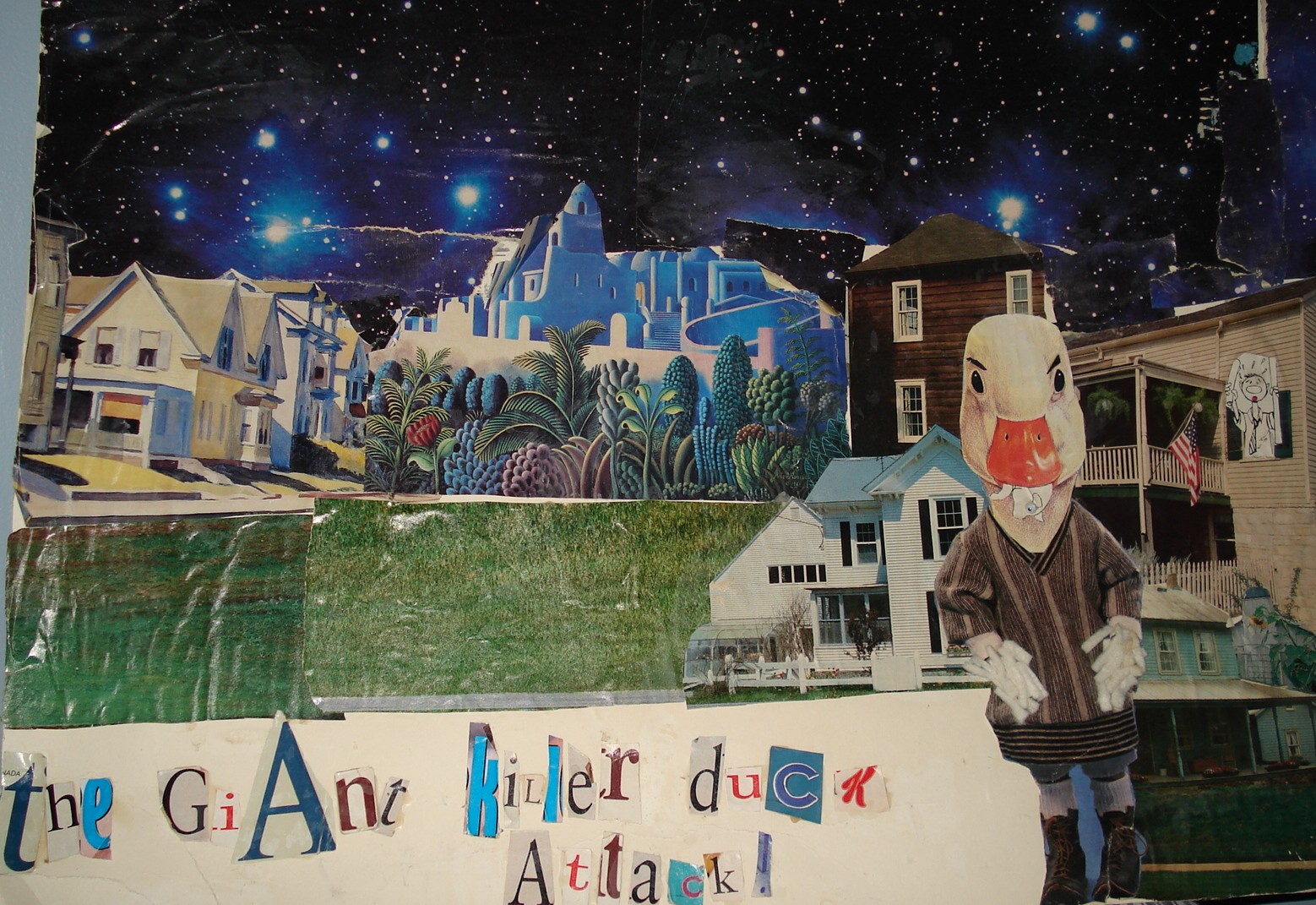
 The Ugly Duckling (a poster made by the author at around age 11) Look Fear in the Eye: Creating Horrific Art and Illustrations |
|||
|
|
||
| Learning Objectives | To appreciate art.To be able to create art that conveys a feeling.To compare and contrast images.
To examine how images relate to text. |
||
| COMPETENCIES | |||
|
COMPETENCY 4 • TO USE CREATIVITYCOMPETENCY
5 • TO ADOPT EFFECTIVE WORK METHODSCOMPETENCY 7 • TO CONTRUCT HIS/HER IDENTITY |
||
|
English Language Arts
COMPETENCY 1 • TO READ AND LISTEN TO LITERARY, POPULAR AND INFORMATION-BASED TEXTSCOMPETENCY 3 • TO REPRESENT HER/HIS LITERACY IN DIFFERENT MEDIA Visual Arts COMPETENCY 1 • TO PRODUCE INDIVIDUAL WORKS IN THE VISUAL ARTS COMPETENCY 2 • TO PRODUCE MEDIA WORKS IN THE VISUAL ARTS COMPETENCY 3 • TO APPRECIATE WORKS OF ART, TRADITIONAL ARTISTIC OBJECTS, MEDIA IMAGES, PERSONAL PRODUCTIONS AND THOSE OF CLASSMATES |
||
|
SELF EVALUATIONVISUAL ARTS APPRECIATION REPERTOIRE | ||
| Materials | Pens, papers and ideasBristol boardMagazine, newspaper and flyers—students will be asked to bring these in.
Scissors Glue Tempera Books—2 or more of the same book with different illustrations in different styles. This happens most often with fairy tales. In this lesson I will use:
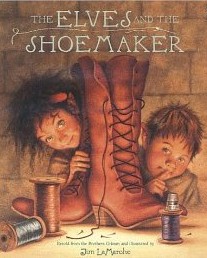 The Elves and the Shoemaker retold from the Brothers Grimm, and illustrated by Jim LaMarche
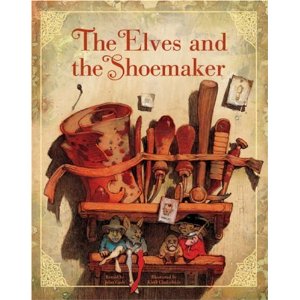 The Elves and the Shoemaker by John Cech, and illustrated by Kirill Chelushkin
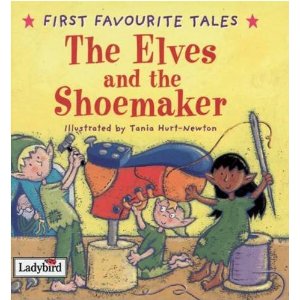 Elves and the Shoemaker: First Favourite Tales by Ladybird, illustrated by Tania Hurt-Newton
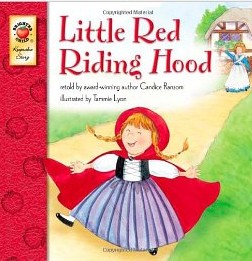 Little Red Riding Hood adapted by Candice Ransom, illustrated by Tammie Lyon
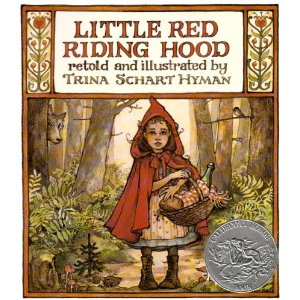 Little Red Riding Hood written and illustrated by Trina Schart Hyman
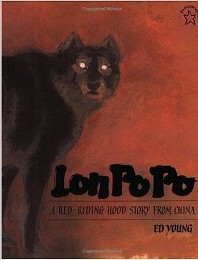 Lon Po Po: A Red-Riding Hood Story from China by Ed Young
|
||
| ProfessionalDevelopmentGoals
|
1. To act as a professional inheritor, critic and interpreter of knowledge or culture when teaching students.2. To communicate clearly in the language of instruction, both orally and in writing, using correct grammar, in various contexts related to teaching.3. To develop appropriate teaching/learning situations.
4. To pilot teaching/learning situations. 5. To evaluate student progress in learning the subject content and mastering the related competencies. 6. To plan, organize and supervise a class in such a way as to promote students’ learning and social development. 12. To demonstrate ethical and responsible professional behavior in the performance of his or her duties. |
||
| OUTLINE | |||
| TIME | ACTIVITY | ||
| Introduction(45 min) | The class will recall The Wolves in the Walls and the effect of the illustration.It will then be pointed out that images are powerful tools for creating and controlling emotion—it is not only in that book.We will looks at 6 storybooks for this lesson.
We will start with The Elves and the Shoemaker. The original story as told by the Brothers Grimm will be read and the pictures shown. Followed by this, the John Cech version, and finally the Ladybird version will be shown. It is not necessary to read the text again, as the stories are very similar. If the students do not believe that the story is the same, another one can be read as proof to them. With teacher prompting, the class will discuss how each version of the story made them feel. Do all of these stories books make you feel the same way? Why? Why not? Which one is the most frightening? The most unsettling? Which is the most different? Are they all intended for the same age group? Why? Why not? Compare and contrast the illustrations. What is the same? What is different?
This activity will then be repeated with the Little Red Riding Hood books. I would personally read Lon Po Po, the Ed Young version, to show how the tales we know exist in other cultures. The different versions have many similarities and differences. Students will be given 15 minutes to jot down their reflections of these discussions in a Thought Journal. |
||
| Focus(1 hr) | Once the class is finished reflecting, they will create their own illustration to a Fairy Tale, giving it a fearful or dark tone.Students will have the choice:They may illustrate a scene from the Fairy Tale that they wrote about in Lesson 03. This would be done individually.
Or They may work in groups of 2 and choose a different Fairy Tale. Students or student pairs will receive one Bristol board. They can use Tempera, markers, cutouts from the fliers or any other material at hand in order to complete this art project. The only restriction is that it must be clear what Fairy Tale is being illustrated. |
||
| Closing (15 min) | Students will write a blurb describing their illustration.They will describe what they chose to do and why.They will reflect on the impact of what they have created.
The art will be displayed on the walls outside of the classroom. Students will be asked to choose one other student’ or group’ work and reflect on what they see and the impact of it. These reflections will be turned in. |
||
Pages
- 1. Rationale of Unit Plan: Imagine a School…
- 2. Topic: What is Fear?
- 3. Materials
- 4. Lesson Plans
- Lesson 01: The Wolves in the Walls–The Value of Images
- Lesson 02: Word Wall of Terror
- Lesson 03: Three Innocent Piglets Devoured by the Savage, Ferocious Wolf–Horrorifying Fables
- Lesson 04: Look Fear in the Eye–Creating Horrific Art and Illustrations
- Lesson 05: Parts 1 and 2–A Song is Worth 1000 Screams
- Lesson 06: What Makes a Villain?
- Lesson 07: Disney's Villains–What Makes Evil?
- Lesson 08: Grimm vs. Disney
- Lesson 09: The Media Scares Me…
- 5. Assessment
- 6. Reflection
- About